Cart 0
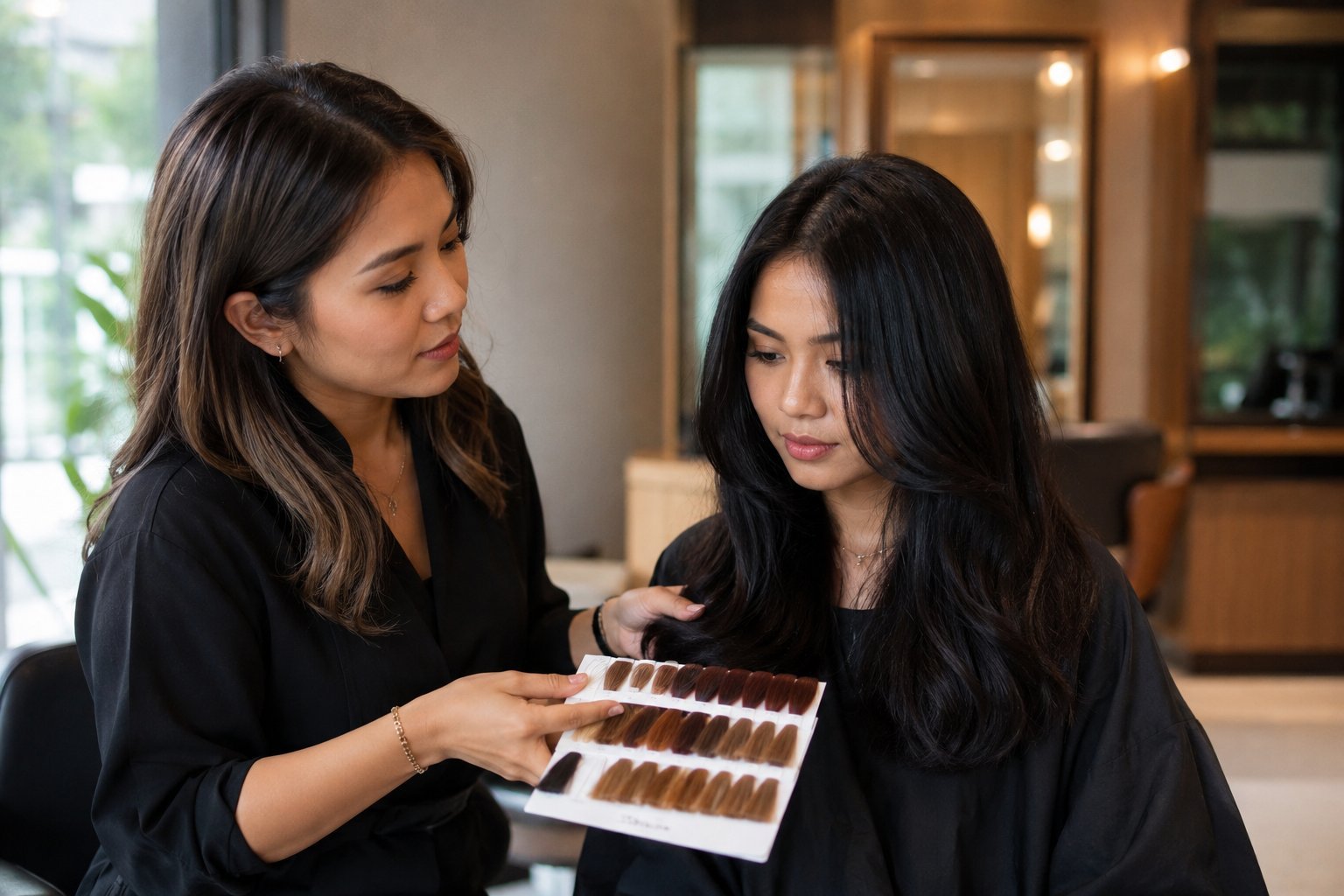

You saved a photo. Ash brown, maybe a soft caramel, possibly that milk tea shade everyone in Bangsar South seems to have right now. You bring it to the salon, and somehow it does not land the same way on you.
Here is the part most hair colour articles skip: it is usually not your skin tone’s fault. Your skin tone matters, but it is nowhere near the biggest factor deciding whether a colour works on you. Most guides get this backwards, which is why they read beautifully and help nobody.
This is a straight answer for Malaysian hair on Malaysian skin, including the bits salons do not always volunteer before you sit down.
The short answer
For most Malaysian skin tones, which run warm to deep with golden or olive undertones, warm and neutral shades are the safest bet: chocolate brown, caramel, honey, warm chestnut, and soft copper. Ash and cool tones can look excellent on deeper skin, but they require significantly more lifting on naturally dark hair, which means more cost, more damage, and more upkeep.
The single most important factor is not your skin tone. It is how dark your natural hair is to begin with, and how much lightening your target shade needs.
Why most “hair colour for your skin tone” advice fails in Malaysia
Read enough of these guides and you will notice they were mostly written for a different market. They assume you are starting from light brown or dark blonde hair, so lifting to an ash or cool shade is a small step.
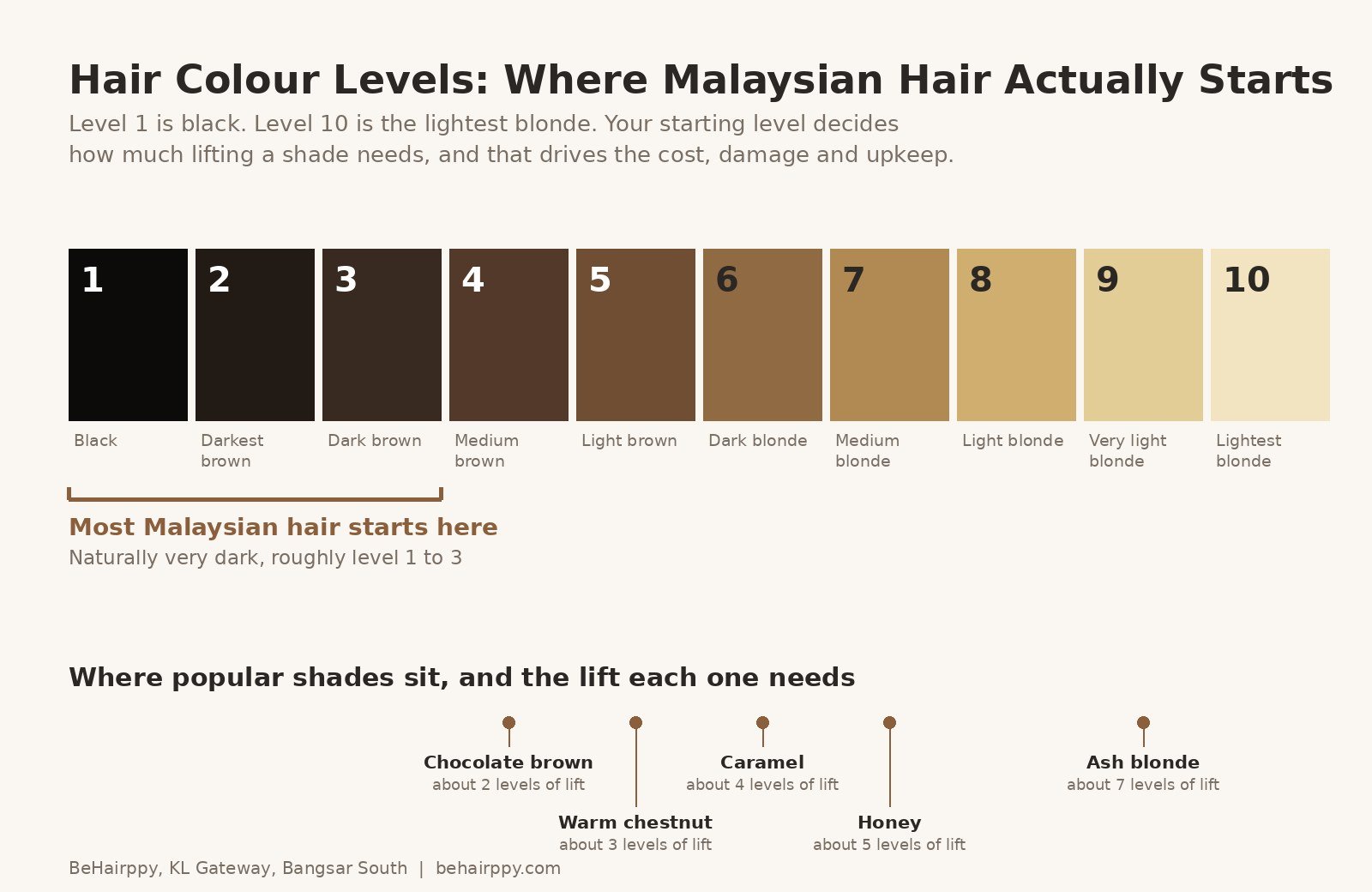
Malaysian hair is generally not that. Most of our hair is naturally very dark, roughly level 1 to 3 on the standard colour scale used in salons, where 1 is black and 10 is the lightest blonde. That single fact changes everything about what is realistic.
Here is what actually happens when you lighten dark hair. Hair contains two pigments: eumelanin, the brown and black pigment, and pheomelanin, the red and yellow pigment. Lightener removes eumelanin much faster than pheomelanin. So as dark hair lifts, the dark pigment goes first and the warm pigment is left behind, which is why dark hair passes through red, then orange, then yellow on its way to pale blonde. This is not a mistake by your stylist. It is the order the pigment leaves in, and it is the reason “why did my hair go orange” is one of the most common questions in hairdressing.
So when a guide tells you “cool ash tones suit olive undertones”, it is not lying exactly. It is just quietly skipping the part where getting your level 2 hair to a clean ash requires lifting through all that red and orange first, then toning it out, and then doing it again in six weeks when the warmth creeps back.
That is the honest gap in nearly every article on this topic. Skin tone advice is the last ten percent of the decision. Your starting level, your budget, and your patience are the first ninety.
What actually decides your colour: your starting level
Before you think about undertones, work out how much lift your target shade needs. This is the number that drives your cost, your appointment length, your hair’s condition, and your maintenance.
No lift or minimal lift (level 1 to 4 targets). Deep chocolate, dark chestnut, espresso, soft dark brown, and rich burgundy tones. These sit close to your natural depth, so they can often be achieved without bleach. Gentlest on the hair, most affordable, easiest to maintain. Colour deposits rather than strips.
Moderate lift (level 5 to 7 targets). Caramel, honey brown, warm chestnut, milk tea, light chocolate, soft copper. This is the sweet spot for most Malaysian hair. Visible, flattering, and achievable without wrecking your hair, though highlights or balayage in this range still involve some lightening.
Heavy lift (level 8 and above). Ash blonde, platinum, pastel shades, silver, and most of what you see on Instagram and Xiaohongshu. On naturally black hair this usually means multiple bleach sessions, often across separate appointments, plus toner every few weeks. It is genuinely achievable, and it can look stunning, but you should walk in knowing the real cost in ringgit, time, and hair health.
If you take one thing from this article: pick your level first, then pick your tone within it. Doing it the other way round is how people end up disappointed.
How to find your undertone (and why it is only a starting point)
Your skin tone is what you see on the surface. Your undertone is the colour underneath it, and it does not change when you tan.
- Warm undertones read golden, yellow, or peachy.
- Cool undertones read pink, red, or slightly blue.
- Neutral or olive undertones are a mix, with olive showing a slight green cast. This is extremely common in Malaysia across Malay, Chinese, Indian, and mixed heritage.
You have probably seen the vein test, where you check whether the veins on your wrist look green (warm) or blue (cool). Being honest with you: treat it as a rough hint, not a verdict. How your veins look depends on skin thickness, how much melanin you have, and the light you are standing in, and it gets harder to read on deeper skin tones, which describes a lot of Malaysians. It is a starting point, not a diagnosis.
Two checks that tend to be more useful:
- The jewellery check. Does gold or silver look better against your bare skin? Gold leaning warm, silver leaning cool, both looking fine means neutral.
- The white fabric check. Hold a pure white cloth to your face, then an off white or cream one. Warm undertones usually look healthier against cream. Cool undertones usually look better against pure white.
Do these in daylight, near a window, without makeup. And if you get a mixed result, you are most likely neutral, which is genuinely good news: neutral undertones suit the widest range of shades.
Best hair colours for Malaysian skin tones
Now the actual answer, organised the way it should be: by undertone, with the honest cost of getting there.
Warm or golden undertones (very common in Malaysia). Go with the warmth rather than against it. Chocolate brown, caramel, honey, golden chestnut, warm copper, and toffee all sit beautifully against golden skin and, conveniently, most of them are achievable with light to moderate lift. Copper in particular is underrated on Malaysian skin and needs far less lifting than people assume, because you are working with the red pigment that is already in your hair instead of fighting it.
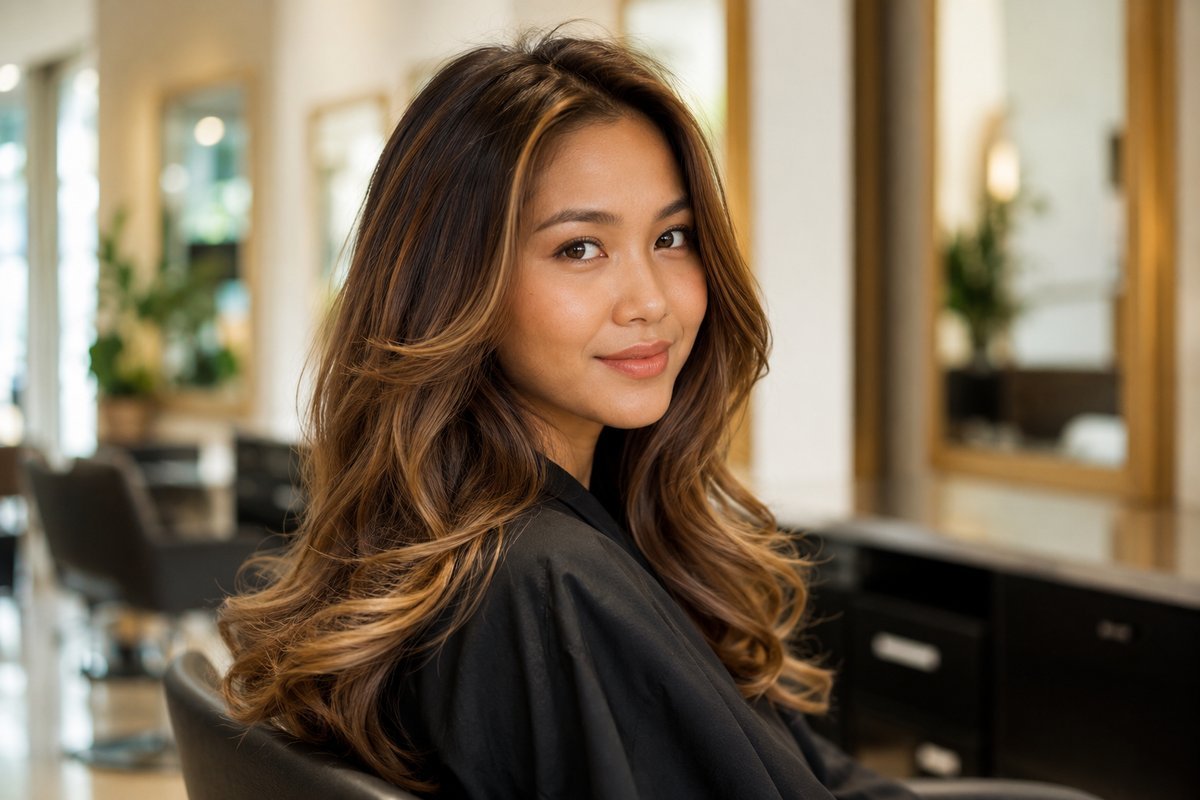
Olive undertones. Olive skin has a subtle green cast, so shades with too much green or ash can make skin look flat or tired. Warmer browns, chestnut, bronze, and honey tones do the opposite and bring warmth back. If you want something cooler, a neutral brown is safer than a true ash.
Deep or tan skin with warm undertones. This is where the internet gives the worst advice, usually some version of “avoid light colours”. Ignore that. Deep skin carries rich, saturated colour extremely well: dark chocolate with warm highlights, mahogany, auburn, burgundy, deep copper, and warm caramel balayage all look excellent. The real consideration is contrast. High contrast between hair and skin is a bold, deliberate look. Lower contrast, where your colour sits a few shades from your natural depth, reads softer and grows out more gracefully.
Cool or pink undertones (less common here, but real). Ash brown, cool chestnut, mushroom brown, and true black all work nicely. Just remember the lifting reality above: a proper ash on dark hair is a lifting job plus a toning commitment, not a one-appointment decision.
Neutral undertones. You have the most freedom. Nearly everything works, so choose based on maintenance and lifestyle rather than theory.
The colours that are harder to pull off in KL
Not to talk you out of anything, just so you decide with your eyes open.
Ash blonde and platinum on virgin black hair. Achievable, but it is a project, not an appointment. Expect multiple sessions, real investment, and ongoing toner. Anyone who promises it in one sitting on level 1 hair without damage is overselling.
Very cool, very light shades on deep warm skin. Not impossible, and plenty of people wear it brilliantly. But it is high contrast and high maintenance, and the warmth returning as it fades will fight the cool tone you paid for.
Pastels and vivids. These need a pale blonde base first, so all the lifting maths above applies before the fun colour even goes on. They also fade fastest.
Any colour chosen purely from a photo. The person in that photo may have had a different starting level, different hair texture, professional lighting, and possibly a filter. It is the single most common reason for a disappointing result.
What KL’s weather does to your colour
This part is genuinely local and almost never mentioned.
Sun and humidity are hard on colour. UV exposure fades and oxidises hair colour, and in a country sitting near the equator you get that year round rather than for three months of summer. Warm tones tend to hold up better here, while cool and ash tones drift warm as they fade, because the underlying warm pigment we talked about earlier is still in the hair, waiting.
Add air conditioning drying your hair out, plus more frequent washing because of the heat, and cool tones simply need more upkeep in Kuala Lumpur than they would in a cooler, drier city. This is a practical argument for choosing warm or neutral shades if you want your colour to still look good in week six without a toner appointment.
It is also worth knowing that colour sits better on a healthy scalp and healthy hair. If your scalp is congested or your hair is stressed from previous colour, a treatment beforehand makes a real difference to how evenly the colour takes. That is why some of our clients book a scalp treatment before a colour service, and it is worth understanding what a head spa actually involves if you have never had one.
How to decide before you book
A short, practical checklist.
- Start with maintenance, not the photo. Be realistic about how often you can return. If the answer is “rarely”, choose a shade within two or three levels of your natural colour so the grow out stays soft.
- Work out your undertone roughly. Warm, cool, or neutral. Rough is fine.
- Pick your level, then your tone. Level sets the cost and the damage. Tone sets the flattery.
- Bring more than one photo. Ideally of hair with a similar starting darkness to yours, not just the final result you want.
- Ask directly how many sessions it takes. A good colourist will tell you the truth, even when the truth is “not in one visit.”
- Ask what it looks like when it fades. Every colour fades. The good question is what it fades into.
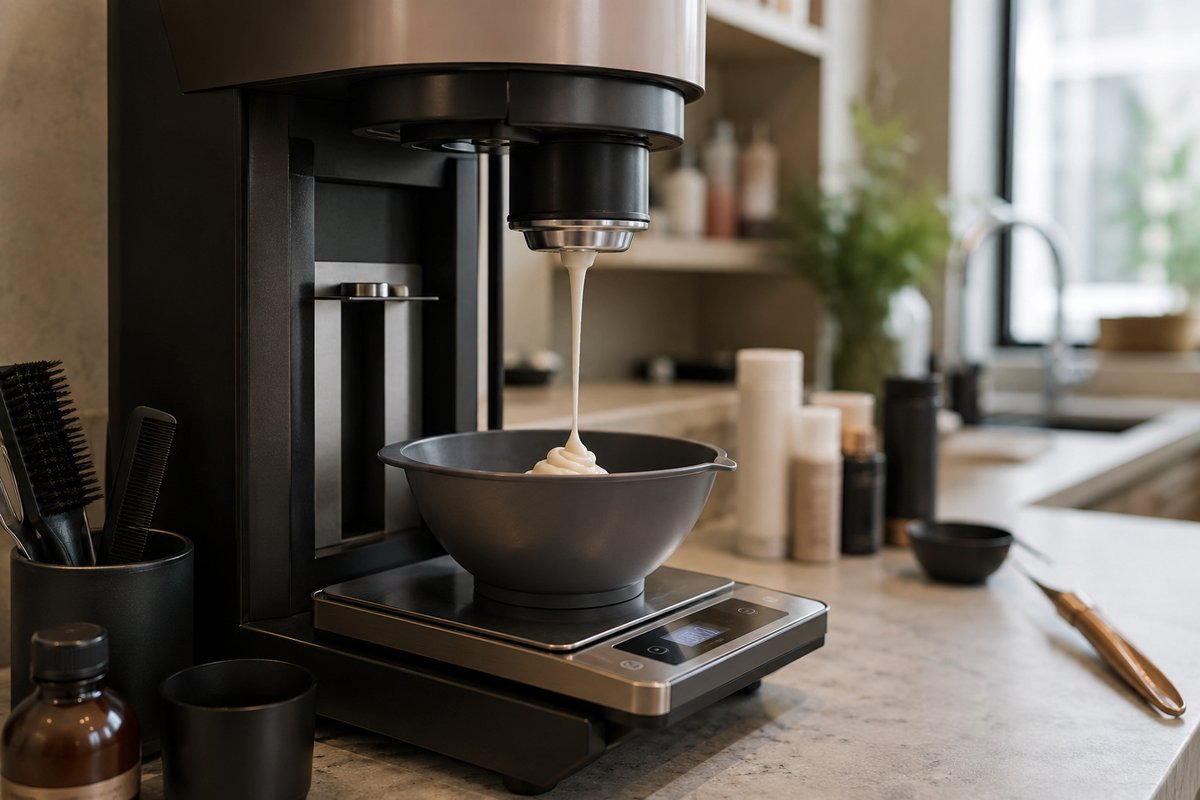
At BeHairppy in KL Gateway, Bangsar South, colour starts with a consultation for exactly this reason. We look at your natural level, your hair’s condition, and your undertone, then tell you honestly what is achievable in one visit and what needs more. We also mix using the AI precise digital colour system BeHairppy runs at the colour bar, which measures colour by weight and saves your formula, so when you come back your shade can be matched again rather than guessed at, even if a different stylist is on shift. Repeatability is not glamorous, but it is the thing clients notice most on visit number two.
Colour services are priced by hair length, so you can estimate before you commit. Current rates are on BeHairppy’s packages and pricing page, and the VIP membership is worth a look if you colour regularly, since it runs for 12 months and is transferable.
If you are curious about where colour is heading this year, our rundown of the 2026 hair colour trends showing up in Malaysian salons covers what is actually being asked for, though it is written for the industry rather than the chair.
The best hair colour for you is the one that suits your undertone, respects your starting level, and survives your actual life in KL’s humidity. Everything else is Instagram.
Book a colour consultation at BeHairppy.
Frequently asked questions
What hair colour suits Malaysian skin tones best?
Warm and neutral shades suit most Malaysian skin tones, since golden, olive, and deeper warm undertones are the most common here. Chocolate brown, caramel, honey, warm chestnut, and copper are consistently flattering and, helpfully, need less lifting on naturally dark hair. Cool and ash tones can look excellent too, but they require more lightening and more upkeep.
Can I go ash blonde if I have dark Malaysian hair?
Yes, but not usually in one appointment. Most Malaysian hair sits around level 1 to 3, and reaching a clean ash blonde means lifting through the hair’s natural red and orange pigment first, then toning. Realistically that means multiple sessions, a proper investment, and regular toner to stop the warmth returning. It is achievable, it just should not be sold to you as a single visit.
How do I find my skin undertone?
Check whether gold or silver jewellery flatters you more, and whether you look better against cream or pure white fabric, both in natural daylight without makeup. Gold and cream suggest warm, silver and white suggest cool, and mixed results usually mean neutral. The popular vein test is only a rough hint, because melanin, skin thickness, and lighting all change how your veins look, especially on deeper skin tones.
Does my skin tone matter more than my hair colour level?
No. Your natural hair level matters more. It determines how much lightening a shade needs, which in turn drives the cost, the condition of your hair, and how often you need to come back. Skin tone decides which tone within that level flatters you most. Choose the level first, then the tone.
Which hair colours fade fastest in Malaysia’s climate?
Cool tones, ash shades, pastels, and vivids fade fastest. UV exposure is year round here, and as colour fades the warm pigment underneath resurfaces, so ash tones drift warm over time. Frequent washing in the heat speeds this up. Warm and neutral shades generally hold their look longer between appointments.
Should I get a scalp treatment before colouring my hair?
It helps. Colour takes more evenly on a healthy scalp and hair that is in reasonable condition, which is why some clients book a head spa or treatment before a colour service. It is not compulsory, and any decent colourist will tell you during consultation whether your hair actually needs it first.
How much does hair colouring cost in KL?
It depends on your hair length, the shade, and crucially how many lightening sessions it needs. A deposit only shade close to your natural depth costs far less than a multi session lift to blonde. BeHairppy prices colour services by hair length (short, medium, long, extra long) so you can estimate before booking, and current rates are listed on the packages and pricing page.