Cart 0
How Much Does Hair Color Waste Cost Your Salon Every Month? (2026 Guide for Malaysian Salons)

If you run a salon in Malaysia, you already know that hair colour products are one of your biggest recurring expenses. What most salon owners don’t calculate is how much of that spend ends up in the bin.
At BeHairppy, we work with salon owners across Malaysia who are switching to digital colour mixing. One of the first things we do with every new salon is help them measure their actual waste rate before and after. The numbers in this post are drawn from those real conversations and the patterns we see repeatedly across salons of different sizes.
Hair color waste is one of those costs that hides in plain sight. It doesn’t show up as a line item on your P&L. It shows up as tubes running out faster than they should, leftover mix bowls being rinsed down the sink, and margins that feel thinner than they ought to be for the number of clients you’re serving.
This post breaks down the real numbers behind hair color waste in a typical Malaysian salon, where the money actually goes, and what you can do about it.
Where Hair Color Waste Happens in Your Salon
Before we get to the numbers, let’s look at the five most common sources of color waste in a typical salon. Most owners are aware of one or two of these. Very few are tracking all five.
1. Over-mixing
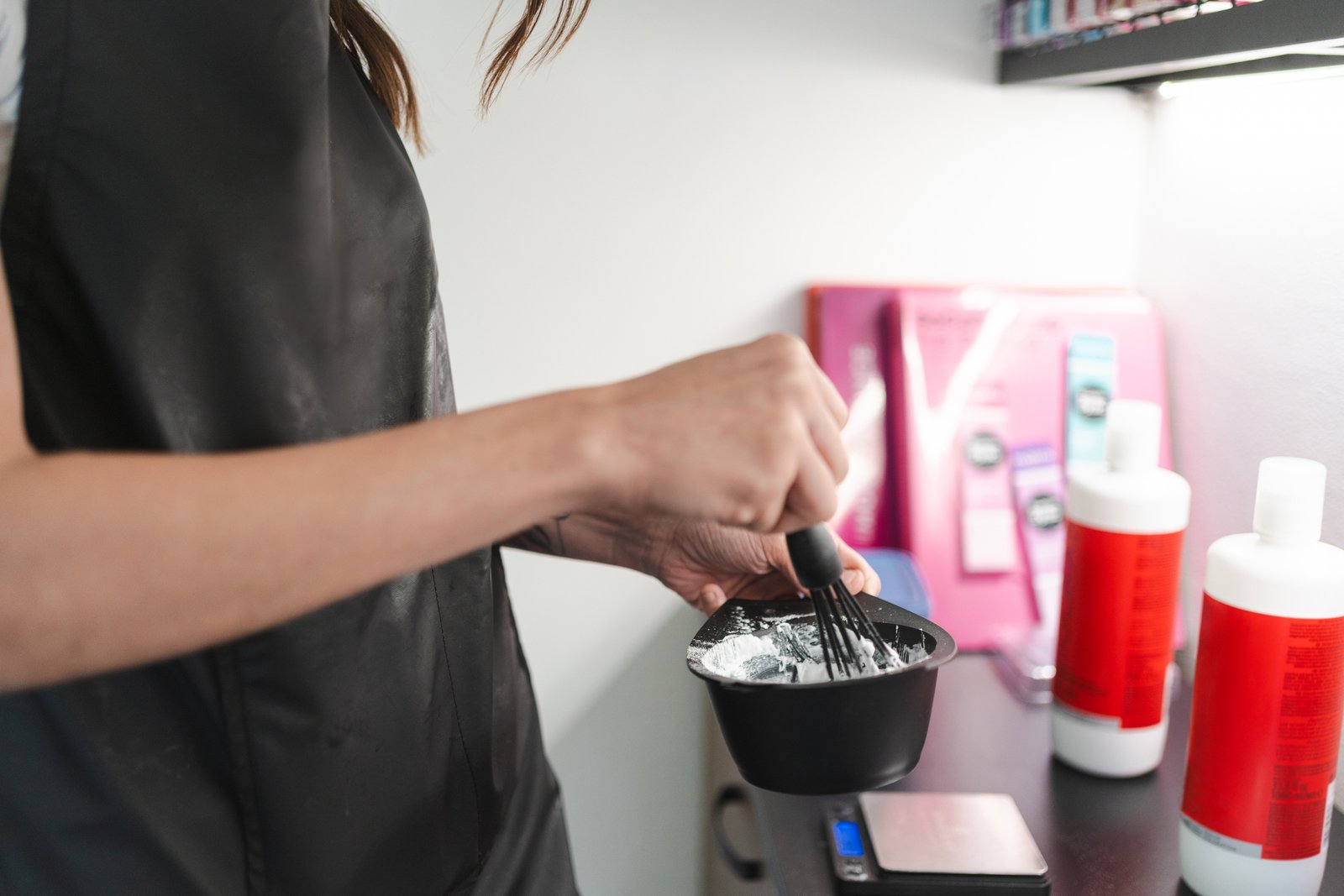
This is the biggest one. When a colourist mixes hair colour by hand, they almost always prepare more than the client needs. The logic makes sense: it’s better to have too much than to run out mid-application and scramble to mix a second batch that might not match.
But “a bit extra” across 10 to 15 colour clients a day adds up fast. A 10g overmix per client doesn’t sound like much until you multiply it across a month.
2. Remixing after colour mismatches
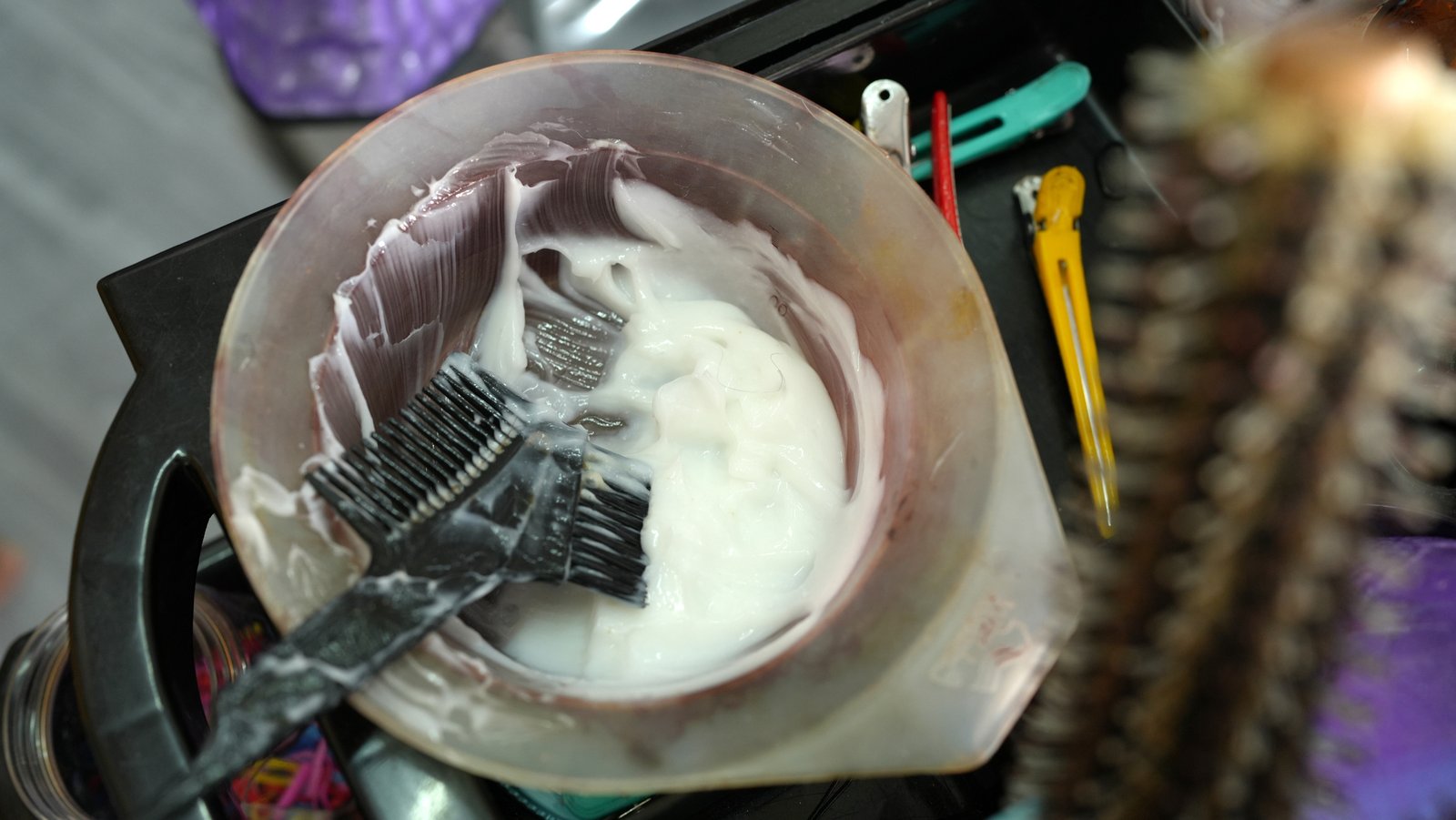
A client comes in with a reference photo. The colourist mixes what they think is right, applies it, and the result doesn’t quite match. Now you’re mixing a second batch to correct it, sometimes a third. That’s double or triple the product cost on a single client, plus the extra chair time.
3. Expired or spoiled stock
Tubes that sit on the shelf too long. Colour that was opened and partially used but not tracked. Product that expires before it gets finished. This is inventory waste, not mixing waste, but it hits the same budget line.
4. Inconsistent formulas between colourists
Colourist A mixes a formula one way. Colourist B mixes it slightly differently. The client notices the colour isn’t the same as last time and asks for a redo. That redo is pure waste: same client, same chair time, double the product.
5. No formula records
Related to point four. If your salon doesn’t record exact formulas per client, every returning client is essentially a first-time mix. There’s no baseline to work from, which means more guesswork, more adjustments, and more wasted product.
The Numbers: What This Actually Costs
Let’s run the math on a mid-sized Malaysian salon doing 12 colour services a day, 6 days a week. These numbers use conservative estimates based on common salon colour product pricing in Malaysia.
Average product cost per colour service: RM 15 to RM 25 (depending on the brand and service type)
Estimated waste rate (manual mixing): 20 to 30% of total colour product used. This is a commonly cited industry figure, and it matches what we consistently hear from salon owners in KL and the Klang Valley when they start weighing their mixes for the first time.
Monthly colour services: 12 per day x 26 working days = 312 services
Monthly colour product spend (at RM 20 average per service): RM 6,240
Monthly waste at 25%: RM 1,560
Annual waste: RM 18,720
That’s nearly RM 19,000 a year going into the bin. For a smaller salon doing 6 to 8 colour clients a day, you’re still looking at RM 8,000 to RM 12,000 annually in waste alone.
In short: A typical Malaysian salon wastes 20 to 30% of its hair colour product through manual mixing, costing between RM 8,000 and RM 19,000 per year depending on salon size and daily colour volume.
And this calculation only covers product waste. It doesn’t include the cost of remixing (extra product plus extra chair time), the cost of client churn from inconsistent results, or the margin erosion from colour corrections that you absorb rather than charge for.
Why Most Salon Owners Underestimate This
There are three reasons salon owners tend to underestimate colour waste.
First, it’s spread across many small moments. No single mix-and-pour feels like a significant loss. It’s 10g here, 15g there. But the cumulative effect across hundreds of services a month is substantial.
Second, there’s no measurement system. Most salons don’t weigh what goes into the bowl versus what goes onto the client’s hair. Without measurement, waste is invisible.
Third, it’s accepted as normal. “Every salon wastes some colour” is true, but the range between a well-managed salon and a poorly managed one is enormous. A salon wasting 10% versus one wasting 30% is paying three times more for the same inefficiency.
What Can You Actually Do About It?
There are two approaches: process fixes and technology fixes. Most salons benefit from both.
Process fixes (free, start today)
Record every formula. Use a notebook, a spreadsheet, or your booking system’s notes field. Every client gets a formula card: exact colour codes, exact ratios, exact quantities used. When the client returns, the colourist doesn’t guess.
Measure what you mix. Use a digital scale. Weigh the colour going into the bowl. Track it against the colour applied. You’ll see your actual waste rate within a week.
Standardise mixing across your team. If two colourists mix differently, you’re doubling your inconsistency risk. Set house formulas for common services and train every colourist to the same standard.
Track product usage monthly. Compare product purchased versus services delivered. If the ratio is drifting, you know waste is increasing even before you pinpoint where.
Technology fixes
This is where digital hair color mixing systems come in. A digital hair color mixer automates the measuring and dispensing process. Instead of squeezing tubes by hand and eyeballing ratios, the machine dispenses exact quantities to a precise formula.
What this changes in practice:
Waste drops dramatically. The machine mixes only what’s needed for each client. No over-mixing “just in case.” Salons we work with typically see waste reductions of 30 to 50% after switching from manual mixing, with the biggest drop happening in the first month once colourists stop “eyeballing” quantities.
Every formula is saved digitally. Client returns six months later wanting the same shade? The machine pulls up the exact formula from last time. No guessing, no variation between colourists, no “close enough.”
Mixing time shrinks. What takes a colourist 3 to 5 minutes by hand takes under a minute with a machine. Across 12 clients a day, that’s 30 to 50 minutes of chair time recovered, which translates directly into capacity for additional appointments.
Consistency becomes automatic. The formula is the formula. Doesn’t matter which colourist is working. The machine dispenses the same mix every time.
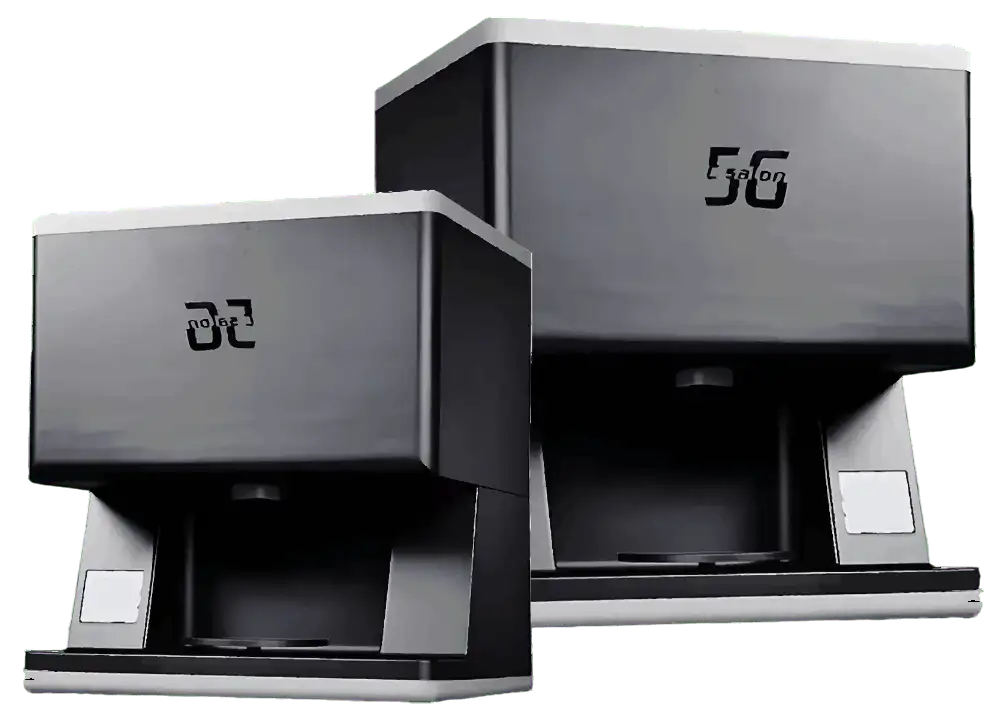
For Malaysian salons, BeHairppy’s 5G Hair Color Machine is built specifically for this. It handles formula storage, precise dispensing, and colour matching in a single system designed for salon workflows. If you want a detailed breakdown of how digital mixing compares to manual mixing across accuracy, speed, and cost, read our full comparison of digital hair color mixers vs manual mixing.
Does the Investment Make Sense?
This is the question every salon owner should ask, and the answer depends on your numbers.
If your salon is wasting RM 1,000 to RM 1,500 a month in colour product (which is realistic for a mid-sized salon doing 10+ colour services a day), a digital mixing system can pay for itself within months, not years. The ROI isn’t speculative. It’s arithmetic: less product wasted per service, multiplied across hundreds of services per month.
Beyond the direct product savings, factor in:
Fewer colour corrections. Corrections cost you product, chair time, and client goodwill. Reducing corrections by even a few per week moves the needle.
Higher client retention. Clients who get the same perfect colour every visit don’t have a reason to try another salon. Consistency is one of the strongest retention tools in the hair colour business.
More services per day. Faster mixing means faster turnover. If you can fit one extra colour client per day because mixing time is shorter, that’s additional revenue with no additional cost.
If you are also weighing which professional colour brand to standardise on across your salon, brand choice directly affects mixing ratios, formula complexity, and waste rate. For a brand-by-brand comparison see our guide to professional hair color brands for Malaysian salons covering Wella, Schwarzkopf, L’Oréal, Goldwell, and the rest.
If you are also weighing the cost of switching from manual mixing to a digital dispenser, we wrote a head-to-head breakdown of manual vs digital hair color mixing costs for Malaysian salons with the full ROI math.
How to Start
If you’re not ready for a machine yet, start with the process fixes. Record formulas, weigh your mixes, track your product usage. Within a month, you’ll have a clear picture of where your money is going.
If the numbers tell you what they tell most salon owners, the next step is looking at a system that automates the parts where waste happens. Talk to BeHairppy about how the 5G Hair Color Machine fits into your salon’s workflow and what the ROI looks like for your specific volume.
Either way, the first move is the same: measure. You can’t fix what you don’t track.
The Bottom Line
Hair colour waste is a silent margin killer for salons. The five main sources are over-mixing, remixing after mismatches, expired stock, inconsistent formulas between colourists, and lack of formula records. Process fixes like weighing mixes and recording formulas are free and effective. For salons ready to go further, a digital hair color mixer like BeHairppy’s 5G system eliminates the guesswork entirely, cutting waste by 30 to 50% while improving colour consistency and freeing up chair time. For most mid-sized Malaysian salons, the machine pays for itself within a few months of measurable product savings.
Written by: Eric, BeHairppy Founder. Works with salon owners across Malaysia since 2010.